
When it’s time to sell your home in Shenandoah Valley, one of the first questions that comes to mind is: “How much is my house really worth?”
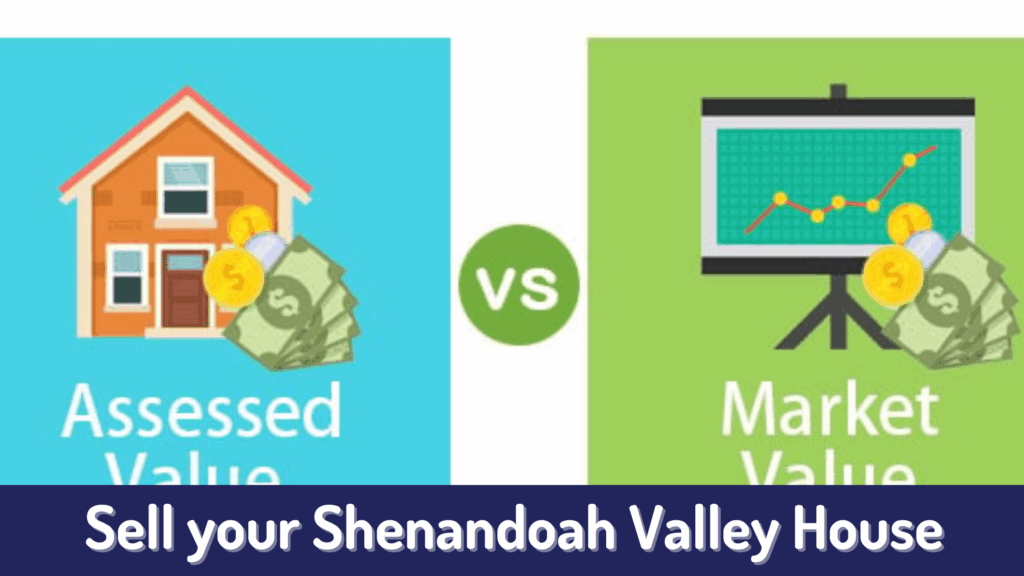
It’s a fair question — and an important one. The challenge is that determining a property’s value isn’t always straightforward. Many homeowners turn to online estimates, neighborhood gossip, or a quick chat with an agent to gauge their home’s worth. But in truth, your property’s value depends on several moving parts — market conditions, location, buyer demand, and the physical condition of your home.
If you’re serious about selling, understanding how market value, assessed value, and appraised value differ can help you make informed decisions and avoid costly pricing mistakes.
Market Value — The True Reflection of What Buyers Will Pay
Market value is essentially what your home would sell for in a fair, open market when both buyer and seller are acting knowledgeably and without pressure. It’s the most realistic indicator of your property’s worth in real-world conditions.
According to Fannie Mae, “Market value is the most probable price that a property should bring in a competitive and open market under all conditions requisite to a fair sale.”
In simpler terms, this is the amount buyers are willing to pay for your property right now — based on current market trends, your home’s condition, location, and comparable sales nearby.
For example, if homes in your neighborhood are selling quickly and buyers are competing for limited listings, your property’s market value may rise. On the other hand, if there’s an oversupply of similar homes or if interest rates spike, your home’s market value might adjust downward.
Setting your asking price close to the true market value helps you attract serious buyers, avoid long listing periods, and prevent repeated price cuts — which can send the wrong message to potential buyers.
Assessed Value — The Number the Government Uses for Taxes
The assessed value of your home is used primarily for property tax purposes. It’s determined by your local government or county assessor, and while it plays a big role in your annual tax bill, it doesn’t necessarily reflect your property’s current market worth.
County assessors evaluate homes based on mass data, such as property size, location, and general market conditions, often using formulas that aren’t updated as frequently as the market itself. Because of this, assessed values can be outdated or inaccurate compared to what your home would actually sell for.
The difference between your assessed value and the true market value is called the equalization rate, which helps ensure fairness across different neighborhoods and property types.
For instance, if your home has been remodeled or if your area has grown in popularity, the assessed value may still lag behind — meaning your property taxes don’t reflect its true market potential. Conversely, in declining markets, assessed values can sometimes remain higher than what buyers are willing to pay.
Knowing your assessed value is helpful for understanding your taxes, but it shouldn’t be used as the main basis for setting your sale price.
Appraised Value — The Professional’s Perspective
The appraised value comes from a licensed professional who conducts a thorough, on-site evaluation of your property. Appraisers examine the home’s physical condition, upgrades, location, lot size, and comparable sales within the area.
While this value is often considered more precise than an assessed value, it’s still an opinion — an informed one, but an opinion nonetheless. Different appraisers may come to slightly different conclusions based on their experience, timing, and interpretation of data.
If a buyer is purchasing your home using financing, their lender will require an appraisal to ensure that the property’s value supports the loan amount. In this case, the appraisal can make or break the deal, since lenders typically won’t approve loans that exceed the appraised value.
For sellers, having your own independent appraisal done before listing can be useful. It gives you a realistic benchmark and helps you price your home confidently — especially if you plan to sell directly to an investor or cash buyer.
Online Estimates — Convenient, But Not Always Reliable
Online property estimators (like Zillow or Redfin) are great tools for quick research, but they should be treated as rough guidelines — not exact science. These platforms use algorithms that pull from public records, user data, and general market trends.
However, they don’t take into account unique features like custom renovations, upgraded interiors, or the specific condition of your home. In fact, homeowners often report that these online values can be off by tens of thousands of dollars — sometimes even more.
Think of online valuations like the Kelley Blue Book for cars: a helpful starting point, but not necessarily reflective of your exact situation. If you’ve made improvements, replaced your roof, or added square footage, your home’s true value may be higher than what you see online.
What All This Means for You as a Home Seller
Understanding the difference between market value, assessed value, and appraised value empowers you to make smarter financial decisions. When you have the right information, you can confidently set an asking price that attracts buyers while ensuring you don’t leave money on the table.
Overpricing your home might lead to long waiting periods, lowball offers, or the need to make multiple price reductions. Buyers can see a property’s pricing history online, and frequent drops can create the impression that something’s wrong with the house. On the flip side, underpricing may lead to a fast sale, but it can also mean missing out on thousands of dollars.
The best approach is to educate yourself. Review comparable sales, understand your tax assessments, and get a professional evaluation. A seasoned real estate investor or experienced property professional can help you interpret all these numbers and develop a pricing strategy that fits your goals and timeline.
Making the Right Move
Selling a home is both a financial and emotional decision. By understanding the different types of home values, you’re better prepared to navigate the process with confidence and clarity.
Whether you’re planning to list your home or explore a direct sale, knowing your numbers gives you the upper hand. It helps you set realistic expectations, avoid unnecessary stress, and achieve a smoother, faster transaction.
If you’re considering selling your Shenandoah Valley home and want a clear, data-backed evaluation, you can always reach out to Five15 Properties for honest insight. We believe in transparency and helping homeowners make informed decisions — whether they decide to sell to us or through another route.
Reach out today to explore your options, get a free property review, and see what your home is truly worth in today’s market.
What Do You Have To Lose? Get Started Now…
We buy houses in ANY CONDITION in VA. There are no commissions or fees and no obligation whatsoever. Start below by giving us a bit of information about your property or call or text at (540) 212 4047.

Determine home value| Home selling guide | Property value | Investor insights